If your team heard Claudeforce and pictured a new button inside the CRM, you're not alone. The name sounds like a packaged product, ready for the marketplace.
It isn't. It's the name of an expanded partnership between Salesforce and Anthropic, announced in late August.
It describes a move in two directions, not a box you install and forget. Underneath the name there is a framework, a plugin and an engine swap.
On one side, Salesforce moves inside Claude. On the other, Claude becomes the default reasoning model in Agentforce and in Slack.
That changes the question worth asking this quarter. It's no longer "which model do we pick for a nice pilot?"
The real question is a different one. Who governs the data once the model is already inside the operation?
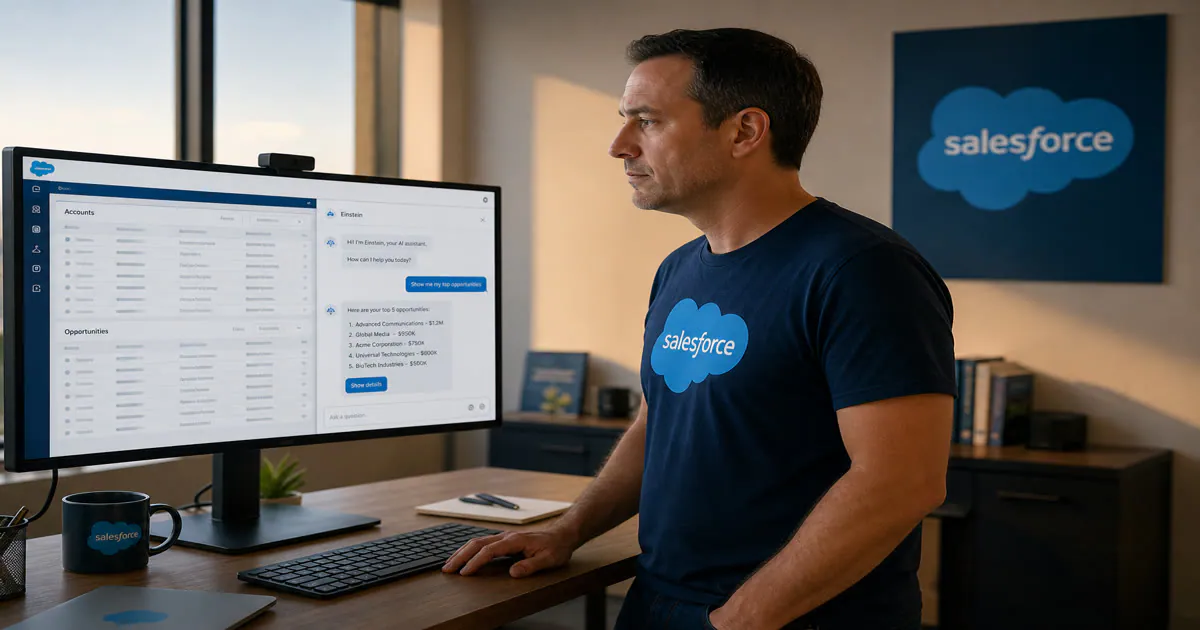
Picture Monday at nine: your sales rep doesn't open ten tabs. They ask the chat for the pulse of their accounts and the chat answers with live data.
The announcement is not a product. It's an umbrella
Think of an umbrella, not an app. Underneath live a strategic framework, a plugin you can already try and a redesign of the internal engine.
Mixing those three things leads to wrong conclusions. That's why this article separates them, one by one.
Only one of the three layers is available today. The other two are a pact and a roadmap.
If your team sells with the Salesforce CRM, the move affects you anyway. Even if nobody has installed anything yet.
Why it came out now (and not next week)
The announcement didn't land in a marketing vacuum. It came out the same day (hours before) as the quarterly results Salesforce had just reported.
The timing isn't cosmetic. It's the backdrop to the most uncomfortable debate of the year for any platform that charges per seat.
If AI agents do the work of a person, do you still need as many per-user licenses? That question runs through boardrooms with less poetry than it gets in a keynote.
Salesforce's argument (an interested party, of course) points to the other side of the board. Frontier models don't replace the CRM: they depend on it.
Claudeforce arrives to support that thesis with a concrete fact. Claude reasons and Salesforce provides data, processes, business logic and governance.
Marc Benioff put it in writing in the late August announcement. Probabilistic intelligence alone doesn't run a company, and deterministic systems don't reason.
A deterministic system always does the same thing with the same input. If the maximum discount is 10%, it's 10% on Tuesday and on Sunday.
A probabilistic model guesses the next step with great skill. Sometimes it gets it right and sometimes it invents a step that sounds reasonable and is wrong.
That's the pact in one sentence. One invents the next move and the other decides whether that move is valid, legal and auditable.
Without that crossover, the chat is brilliant and the company stays the same. With it, the chat stops being a toy and becomes infrastructure.
Three layers. Only one is on
A headline blends everything. Your team can't afford that blend.
Below are the three layers, with what each one does and what it doesn't. Read them in order and don't merge them into one slide.
Layer 1. The strategic framework (the agreement on roles)
This layer isn't switched on in an Org. It's the contract for who does what.
Claude provides reasoning and tool use. Salesforce provides the system of record: live data, processes and governance.
Think of a brilliant copilot who doesn't know your company's rules. Without data and without governance, it reasons in a vacuum and still sounds convincing.
With the framework, the model stops being a loose chat. It starts operating on the same board your operation already uses.
That's the Claudeforce thesis. It's not magic, it's a division of labor.
Layer 2. Salesforce in Claude (the only thing you can try today)
Here there is a product. Salesforce in Claude is a plugin with 37 prebuilt sales skills (Salesforce, 2026).
The promise fits in one line. Query, update and act on live CRM data without opening Salesforce.
Today it runs as a pilot with selected customers. The open beta is planned for the following month.
The Service skills are set for the end of this year (sales first, service after). The schedule is asymmetric on purpose.
An admin connects the plugin just once. Authentication and permissions are centralized for the whole organization.
The sales rep configures nothing. They read context and build a board with accounts, deals and live data.
That matters for teams that already live in the chat. The CRM stops being a screen and becomes a service the model calls.
Layer 3. Claude inside Agentforce and Slack
The third layer flips the plug. Claude becomes the reasoning engine of the Atlas Reasoning Engine.
It also becomes the default model (not optional) of Agentforce Vibes, Agentforce Coworker and Agent Builder. The lab takes the driver's seat.
In Slack, Slackbot, Claude Tag and Slack Code appear. The work chat stops being just messages and becomes a place where the model acts.
For regulated industries the angle is different. Inference can run through Amazon Bedrock and through Salesforce's Trust Boundary.
Salesforce declares itself Anthropic's preferred CRM. Slack, its preferred work platform.
This layer isn't today's plugin, it's the redesign of the internal engine. Treat it as a direction, not as a button you already have.
What the 37 skills cover (no public list)
The itemized list of the 37 skills was not published. The families are known.
That's enough to map intent. It's not enough to certify coverage against your playbook.
Daily plan: what to handle, in what order and with which hot accounts on the table.
Health of a live deal: not a score, but expected objections and a response plan built from calls, emails and stage changes.
Meeting prep: context, recent history and what is still left to close before you walk into the room.
Drafting and updating: emails, proposals with pricing, record updates and process execution.
Notice the leap. It's not "write me a nice email."
It's read, decide and write back in the same system. The full cycle, not a loose draft.
Deal health is the example that changes the craft the most. A score says "at risk"; a useful skill says which objection is coming and what evidence to answer with.
If your sales operation also lives in channels like WhatsApp, the contrast helps you map the landscape. A product like Sellium organizes the sales conversation in that channel, while Claudeforce attacks the same problem from the CRM and the model.
The 10,000-click demo
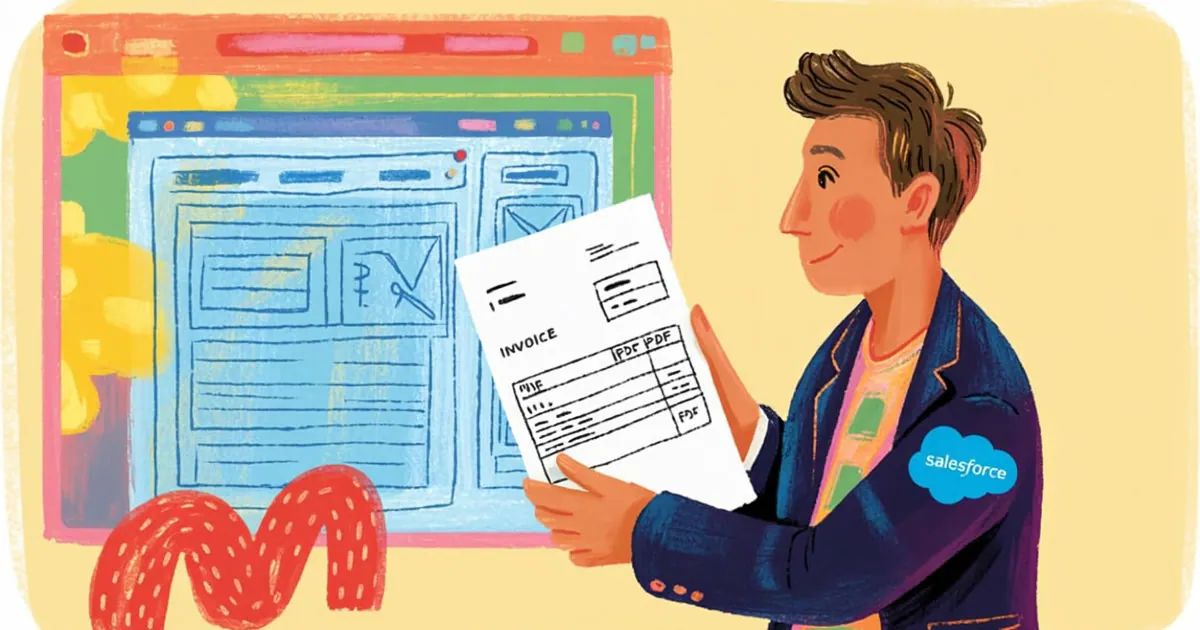
In the official demo, Claude cross-references CRM, Slack and email. It detects what is missing to move an Opportunity forward.
It builds a plan to re-engage the decision maker. It drafts the proposal and updates the record.
Patrick Stokes (Salesforce) summed it up for VentureBeat with an image that is hard to forget. Synthesizing those records and building the plan is about 10,000 clicks in the app versus about 30 seconds in Claude.
There is an observation worth more than the number. The team uses the CRM more than before, because navigating the interface disappeared.
That's the trick. The CRM doesn't become dispensable, it becomes invisible.
The interface stops being the product. Data and rules move to center stage.
If the demo dazzles you, ask one question after the applause. Which write was recorded, and who authorized it.
The CRM without a screen: Headless 360 and MCP
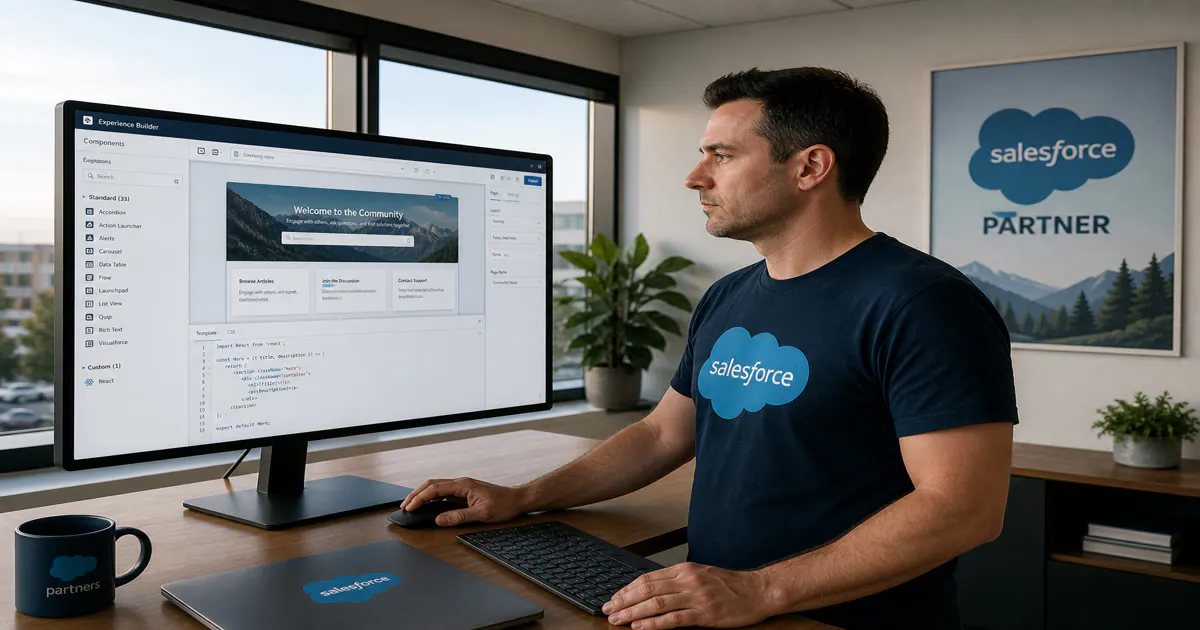
Since the start of this year, Headless 360 exists. It is APIs, MCP servers and CLIs that expose data, apps, processes and governance without a screen.
Salesforce is positioning itself as infrastructure for agents, not just as an application. The message for the developer team is clear.
Value moves to the data contract. The screen is one more channel, not the final destination.
MCP is Anthropic's open standard. It lets a model invoke tools and data in real time.
How do you explain it to someone who doesn't code? Think of a common power outlet for tools.
Before, every lamp came with its own odd plug. Now there is a standard, and the model can switch on a query or an update without inventing a cable for each person.
Before, each person wired those connections by hand. Now the admin solves it once for the whole Org.
That's the governance leap. Less "my personal Claude" and more "the company's Claude."
If you already think of Salesforce as your system of record, Headless 360 confirms the bet. The interface is optional and the rules are not.
Permissions that don't get copied. Writes that come back home
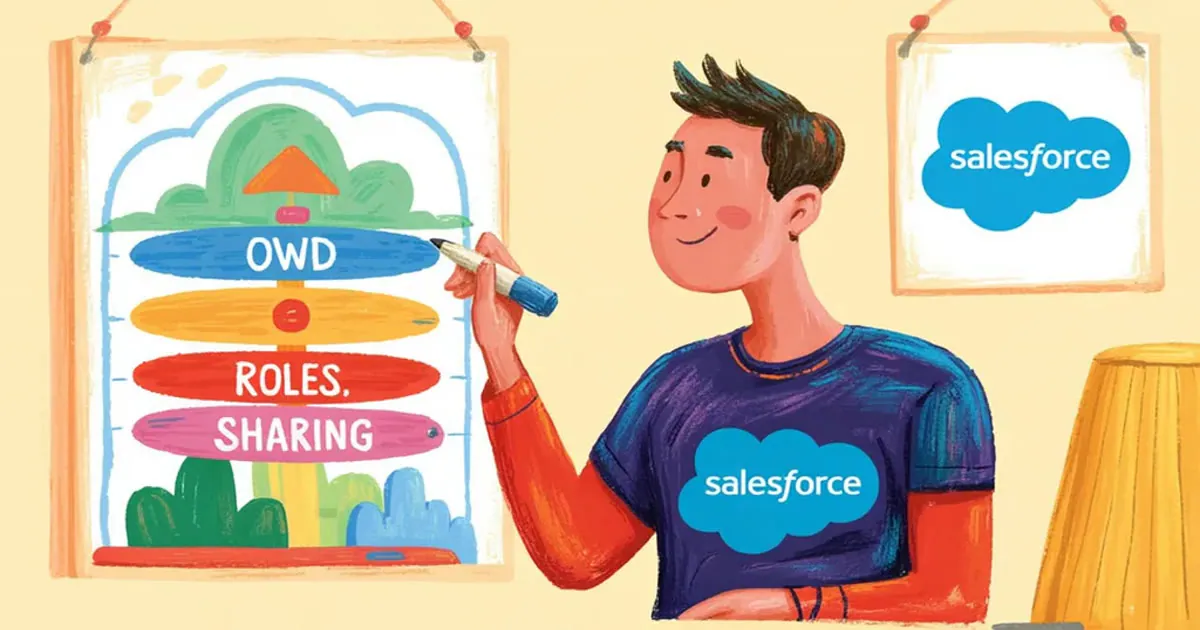
Permissions are not duplicated. Writes go back to the CRM, with the rules, validations and permissions that already exist.
Claude sees and does only what that person could already do. If they couldn't edit the amount, neither can the model.
The difference is architectural, not a brochure line. An assistant working on a copy invents a parallel world.
An assistant working on the same base governs the operation. That's where the quarter's trust lives or dies.
Autonomy is configurable. It can ask for confirmation before sending an external email, or send it if the criteria allow it.
The official formula fits on one line and is worth hanging on the wall. People direct, agents execute, the system of record governs.
Anthropic states zero retention on Sonnet, Opus and Haiku. The data doesn't stay behind in the model's lab.
That sounds flawless in a brochure. In banking, healthcare and the public sector, the next question is a different one.
Where does the forensic trail of the reasoning end up? Security isn't solved with a cute plugin.
It's solved when the model can't skip what the CRM already enforces. Without that, autonomy is just another word for "hopefully."
The numbers that don't match (treat them as narrative)
The same day, two sets of numbers circulated. They don't match, and that is already information.
The official press release talks about 8.1 million hours of annualized productivity with Slackbot on Claude. It says that is more than double the previous quarter.
VentureBeat publishes a different picture. 83% of the workforce uses Slackbot with Claude, and 3.8 million hours are mentioned.
Don't try to reconcile them with a calculator. Treat them as communication, not as an audited metric.
The internal story is one of mass adoption. The external story is one of impact, on a different scale.
To decide a budget, ask for the breakdown. "Saved" hours are not margin hours.
What changes for a mid-sized company
In a mid-sized company, value moves from the interface to the data and the rules. If the model gets it right, the team stops fighting with screens.
If the model invents a next step or updates a field wrong, the damage is to the business. It's not a typo, it's a pipeline that lies.
That's why writes must go through the system of record. Validations plus an audit trail.
Without that, the copilot becomes an operational risk with a smile (nice to demo, expensive to undo). Speed stops being a virtue.
The hook of a single permission model carries a lot of weight in financial services, in healthcare and in the public sector. One single place where "who can do what" lives.
The weak point is reasoning traceability. Zero retention doesn't mix well with forensic logs.
You can know what was written in the CRM. You may not know with the same rigor why the model chose that next step.
Also, inference and data live with two different vendors. That requires a clear map of data transparency.
The budget splits too. You will see two invoices: platform licenses plus inference usage.
VentureBeat says it bluntly. If the interface becomes undifferentiated, pricing power shifts to the model lab.
There is no public list of rates or countries. Anyone who needs to build a pricing case will have to ask, not google a table.
For B2B SaaS teams the dilemma is familiar. They sell software, and now the software they sell with hides behind a chat.
A demo is worth more than a press release. Ask to see a real write, with a validation that fails on purpose.
The Vantegrate team works as a Salesforce and Oracle partner. The useful question is not "Claude yes or no".
It is who governs when Claude writes. That is the conversation worth an architecture meeting, not just a marketing one.
What is not yet in the spec sheet
Nobody has published the list of the 37 skills. Without that list, you can't map coverage against your sales process.
There is no clear pricing or packaging either. It could be model credits, a platform add-on, or both.
The real breadth of write access in the pilot is still unknown. Drafting and waiting for confirmation is not the same as running a process.
It is also unresolved how this coexists with the Agentforce integration in other assistants, announced last year. It could be coverage or a transition.
A plugin with prebuilt skills reduces friction. It does not guarantee ROI.
The return shows up when the data is clean and the rule is strict. Not when the chat answers fast and everyone applauds.
How to look at it without buying the headline
The central question still stands. What Claudeforce is and why it was announced now.
It is the umbrella for a two-way integration, announced in late August alongside the quarter's numbers. Salesforce goes into Claude, and Claude stays as the brain of Agentforce and Slack.
Today you can touch only one layer: the Salesforce in Claude plugin, in pilot. The rest is framework, internal engine and calendar.
If you are evaluating, don't start with the shine of the demo. Start with who writes, with what permission and what gets logged.
Ask to see the failure (a field that the validation rejects, an email that asks for confirmation, a user who shouldn't see an account). If the failure doesn't show up in the test, the test isn't finished.
When that works, Benioff's line stops being a press release. The intelligence that hesitates and the system that doesn't start working together.
That is when Claudeforce stops being a strange name. It becomes an architecture decision.