Artificial intelligence in logistics has stopped being a lab experiment and become the nervous system of modern operations. And the gap between the companies that adopt it and those that put it off is becoming, frankly, hard to hide.
The new brain of the supply chain
Just a few years ago, talking about AI in the supply chain sounded like corporate science fiction. Today it is the backbone of any serious operation that aims to compete.
The reason? Logistics generates a monumental volume of data: orders, routes, inventories, sensor data, weather, traffic, and consumer habits. Processing all of that manually is about as efficient as counting grains of rice with a toothpick.
Machine learning algorithms, on the other hand, devour that information in real time. They detect patterns that a human team would take months to identify and, most interesting of all, they learn on their own as more data accumulates.
Why logistics is the perfect terrain for AI
The supply chain has three characteristics that make it the ideal setting for artificial intelligence:
A massive volume of data, both structured and unstructured, that feeds the models.
Repetitive decisions that can be automated without losing quality.
Interdependent variables (weather, demand, inventory, and transportation) that require simultaneous analysis.
In this setting, AI agents do not replace people: they free them from mechanical tasks so they can focus on what is truly strategic.
Concrete benefits that are already paying off
Adopting AI in the supply chain is not a marketing promise. It is a series of measurable benefits that directly affect the bottom line.
Real reduction in operating costs
Artificial intelligence adjusts stock levels with surgical precision. It avoids excess inventory (which consumes square footage and capital) and prevents stockouts (which cost sales and reputation).
According to McKinsey, companies that adopted AI early in the supply chain improved their logistics costs by 15% compared to their slower competitors (McKinsey, 2021). And that is without counting the indirect benefits in customer satisfaction.
Fewer human errors, more precision
Intelligent systems guide operators step by step during picking. They indicate the right product, the exact quantity, and the precise location, almost like a GPS with a photographic memory.
The result is decisive: picking errors, returns, and complaints drop. In AI-assisted warehouses, error rates can fall sharply compared to traditional manual processes.
Operating speed that changes the game
AI optimizes internal warehouse routes, calculates the shortest path, and reorganizes the workflow according to demand at that moment. What used to take hours is now solved in minutes.
That operating speed translates into something concrete: more orders shipped with the same resources. In other words, real productivity, not the kind you see in a PowerPoint.
A customer experience that wins people over
When everything flows, the customer notices. They receive what they ordered, at the promised time, with full end-to-end visibility of the process.
That transparency and predictability are now a huge competitive differentiator. People no longer compare just prices: they compare complete experiences.
Real applications that are transforming the industry
Let's move from concept to the field. These are the areas where applied artificial intelligence is leaving a concrete, verifiable mark.
Smart warehouses that think for themselves
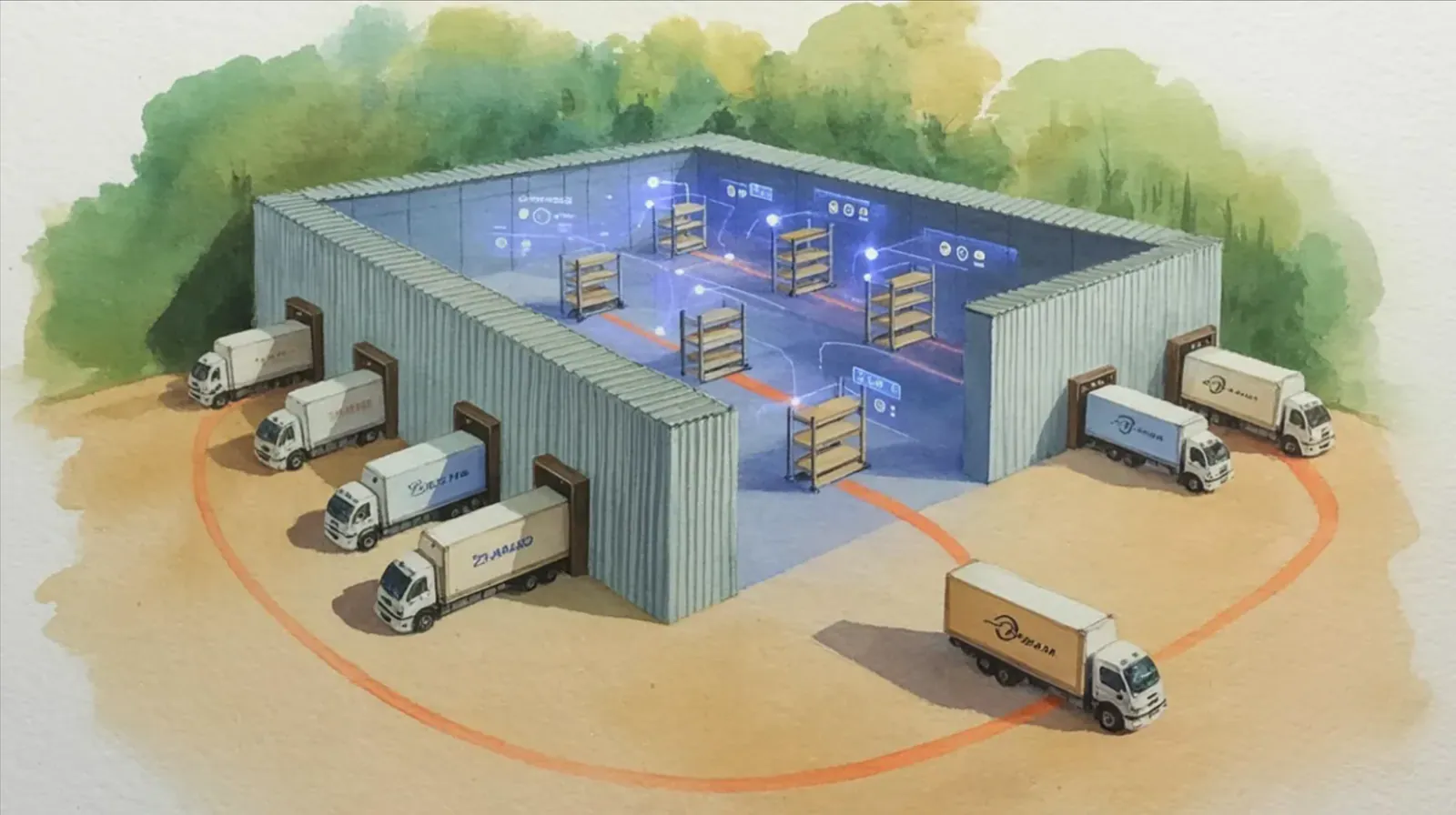
The modern warehouse looks more like an orchestra than a shed. Warehouse management systems, combined with AI, coordinate robots, operators, and processes in a synchronized dance.
The algorithms analyze turnover history and place the best-selling products in the fast-access zones. It is a decision that used to be made by a planner with a spreadsheet and coffee; now a system makes it in milliseconds.
Dynamic slotting (the constant reassignment of locations according to demand patterns) is one of the cases where AI shines the brightest. The physical layout of the warehouse is no longer static: it breathes with the business.
Last mile: the juiciest challenge of all
If there is one stage where logistics gets truly complicated, it is the final delivery to the customer. Traffic, time windows, inaccurate addresses, urgent orders, and absent customers… chaos turned into an operation.
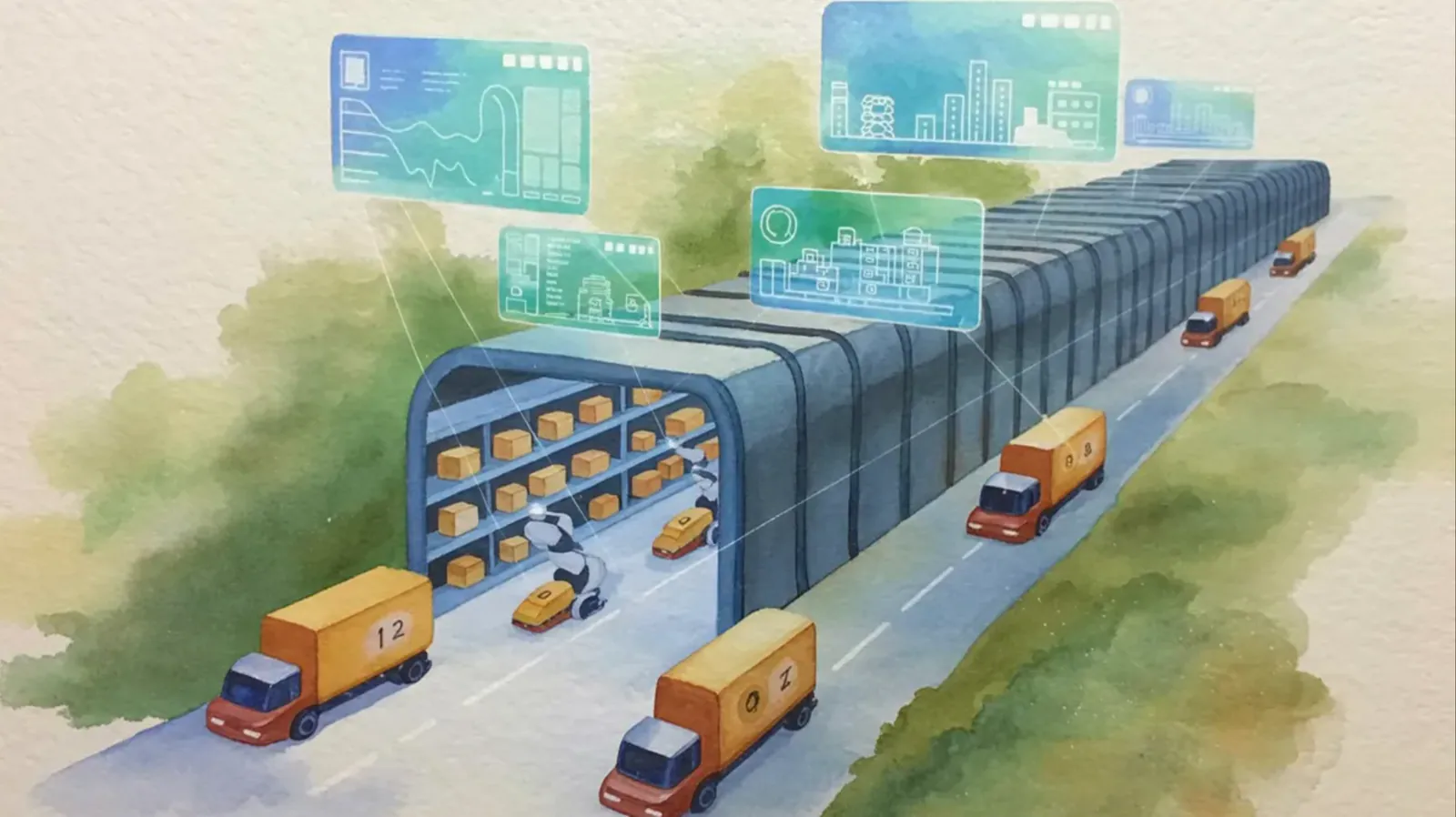
This is where platforms like Trazzo change the rules. AI-assisted last-mile logistics can recalculate routes in real time, prioritize deliveries according to business criteria, and offer the customer minute-by-minute tracking.
The result: fewer miles driven, less fuel consumed, and more successful first-attempt deliveries. For a company with thousands of daily shipments, optimizing even a portion of the routes can mean very large savings. If you want to see what other changes have already reached the operation, check out what artificial intelligence is doing to logistics.
Demand planning that anticipates the future
Predicting demand has always been a mix of statistics, intuition, and a bit of faith. AI turned that art into a much more precise science.
The models analyze historical data, seasonality, market trends, special events and even signals from social media. They detect patterns the human eye can't see and adjust procurement before the change happens.
A conversational business intelligence tool like Metrix takes this one step further. Anyone on the team can ask the system, in natural language, what will happen to inventory next month and get an actionable answer in seconds.
Predictive maintenance: fix it before it breaks
Industrial equipment generates millions of data points through sensors. AI interprets them and warns you when a machine is about to fail, before it actually fails.
This prevents unplanned downtime, extends the useful life of assets and reduces repair costs. It's like having a mechanic who can see the future and tell you when to change the oil before the engine starts to suffer.
Document processing that frees up valuable hours
Logistics runs on mountains of paper: invoices, delivery notes, waybills, certificates and customs declarations. Processing them by hand is a silent drain on time and energy.
Specialized solutions like Arconte use document AI to read, classify and extract information from any document in a matter of seconds. What an administrative team used to process in a week now gets done while you have a coffee.
How to integrate AI into your supply chain without losing your mind
Here comes the million-dollar question: where do you start? Launching an AI initiative without planning is the surest way to waste money and frustrate your team.
Step 1: run an honest diagnosis
Before buying technology, take a hard look in the mirror. Which processes hurt the most? Where are you losing time, money and opportunities?
Identifying those pain points gives you the map to see where logistics digital transformation can have the biggest immediate impact.
Step 2: define measurable goals
"We want to use AI" is not a goal. "We want to reduce order preparation time by 20% in six months" is.
The more concrete the goal, the easier it is to choose the right solution and measure the real success of the project. AI without metrics is just technological enthusiasm.
Step 3: choose a partner who knows what they're doing
Technology alone doesn't solve anything. What makes the difference is working with experts who have already walked the path and know the traps along the way.
At Vantegrate we build artificial intelligence agents specific to business operations, natively integrated with platforms like Salesforce and Oracle. That deep integration with the systems your company already uses is what separates a successful project from one that stalls halfway.
Step 4: start simple, scale to complex
Successful AI projects almost never start with a mega-implementation. They start with a limited pilot, measure the results, adjust and then scale.
It's the logistics version of what programmers call "think big, start small, move fast": think big, start small and move fast.
Step 5: monitor and adjust continuously
AI is not a project that ends; it's a process you keep refining. The models learn, the business changes and the data is constantly updated.
Keeping a continuous monitoring system in place lets your AI investment keep generating value over time, not just on launch day.
The challenges nobody tells you about (but you should know)
It would be dishonest to paint everything rosy. Adopting AI in logistics also faces real obstacles that you should keep on your radar before you start.
Data quality: the input that determines everything
AI is only as good as the data you feed it. If your records are messy, duplicated or outdated, the algorithms will produce answers as chaotic as the input.
Before investing in sophisticated models, you should put your data house in order. Without that foundation, the rest is like building a skyscraper on sand.
Cultural change in teams
People may feel that AI is coming to replace them. That perception creates resistance, and projects fail not because of the technology but because of the human dimension.
The key is to communicate well: AI frees up time for more interesting tasks, it doesn't push people out. The teams that understand this are the ones that benefit most from the transformation.
Integration with existing systems
Few companies start from scratch. Most have ERPs, CRMs and legacy platforms that have been running for years and storing valuable information.
Integrating AI with that ecosystem requires technical expertise and, above all, strategic patience. It's not plug-and-play: it's serious engineering.
Where the intelligent supply chain is headed
What we're seeing is only the first chapter. The next wave of innovation combines AI with IoT sensors, digital twins and autonomous agents that negotiate with each other.
Imagine a supply chain in which a planning agent talks directly to a transport agent, adjusts routes, renegotiates deadlines and resolves unexpected problems without human intervention. It's not futurism: it's already happening in advanced pilots at leading companies.
Industries already seeing results
AI adoption in logistics is not uniform: some sectors are moving faster than others, and they are worth watching.
Retail and E-commerce: they adjust inventory and optimize deliveries in real time to keep the promise of fast shipping.
Manufacturing: integrates AI with production lines to synchronize sourcing, production and distribution.
Healthcare and pharma use predictive models to guarantee the cold chain and the availability of critical products.
Food and beverage: optimize routes for perishable products and minimize losses from expiration.
3PL logistics: deploy AI to stand out in a market where margin depends on efficiency.
The common pattern in all these cases is clear: the companies that invested early in clean data and digitized processes are the ones capitalizing on AI with the least friction today.
The human factor remains irreplaceable
Despite all this sophistication, strategic decisions, commercial agreements and the creativity to solve crises remain human territory. AI is an extremely powerful tool, but the brain behind the wheel is still you.
The logistics professional of the future doesn't compete against AI: they use it as an extension of their capabilities. This is the digital centaur model, the best of human intelligence combined with the best of artificial intelligence.
The time to act is now
Companies that adopt these technologies today are building a sustainable competitive advantage that will be hard to reverse. Every month that goes by without an AI project underway is a month in which your competitors accumulate data, refine models and learn things you don't know yet.
The good news is that getting started has never been this accessible. Platforms have matured, costs have dropped and success stories have multiplied across all industries.
If you want to see how to apply artificial intelligence in concrete ways to your logistics operations, you can book a personalized demo with our team. We show you live how our agents can integrate into your supply chain and start delivering results from day one.
Smart logistics is not a future option: it is a decision for the present.