There are moments in the history of technology that split everything into a before and an after. This is one of them.
Salesforce, a pioneer of modern SaaS and the undisputed benchmark of cloud software, has just made a bold decision. It has taken apart its own platform so AI agents can operate it, with no human intervention and no need to open a browser.
The initiative is called Headless 360 and was announced at TDX, its annual developer conference in San Francisco. And yes, headless means exactly what you're thinking: no head, no visual interface, no screens.
The riskiest move in Salesforce's history
To understand the magnitude of what happened, you need to put things in context.
The enterprise software sector is facing a radical transformation. The concern is straightforward: will the language models from Anthropic, OpenAI and others make traditional SaaS obsolete?
The existential question hanging over the industry is brutal. In a world where AI agents can reason, plan and execute tasks, does a company still need a CRM with a graphical interface?
Salesforce says it categorically: no.
That is, precisely, the point. "Two and a half years ago we made a decision: rebuild Salesforce for agents," the company stated. Instead of hiding capabilities behind an interface, they exposed them so the platform would be fully programmable and accessible from any environment.
What does "headless" mean and why should you care?
Let's keep it simple. Imagine a car.
Until now, as before, you drove the car: you had a steering wheel, pedals, a screen with GPS, mirrors and a gear shift. All of that interface was there so a human could drive. The same car still has an engine, brakes, steering and transmission, and all the systems work. But they removed the steering wheel, the dashboard and the screens.
Why? Because you no longer drive it. An autonomous system drives it, connecting directly to the mechanical components.
That is headless. All the power of the engine is still there, but now it is used by an artificial intelligence that doesn't need pedals or a steering wheel to function.
Salesforce is saying it. Salesforce states something similar. The platform, with decades of evolution, security, integrations and business logic, now lets any AI agent operate it directly through an API, an MCP or a command line. They are redefining enterprise software.
Headless 360 rests on three pillars. Each one answers a different question about how companies will build, deploy and maintain software in the age of agents.
Pillar 1: Build however you want
The first pillar includes more than 60 new MCP tools and more than 30 preconfigured skills (Salesforce, 2026). They let external agents (Claude Code, Cursor, Codex, Windsurf) access the customer's Salesforce org in real time with full access, so developers are no longer required to use the Salesforce IDE.
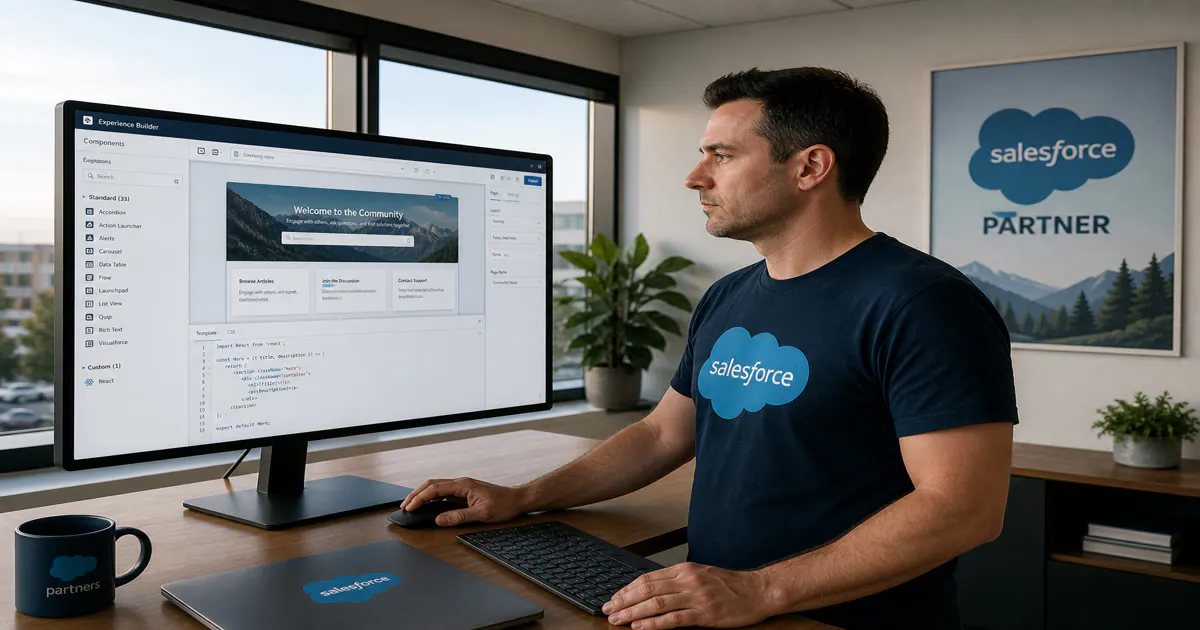
Developers can use any terminal to build, deploy and manage applications. Agentforce Vibes 2.0 includes an open agent harness that supports the Anthropic and OpenAI SDKs. Worth noting: native support for React. During the event's main demo, the presenters built a working application using React (not Salesforce's Lightning framework) that connected to the org's metadata via GraphQL and inherited all of the platform's security primitives.
For those building products on these technologies, this opens up an entirely new universe of expressive possibilities on the frontend. If you want to see how this story continued, check out what Dreamforce delivered on AIforce and the new role of the developer.
Pillar 2: Deploy on any surface
The second pillar focuses on the Agentforce Experience Layer, which separates the agent's action from how it is displayed. Interactive components render natively in Slack, in mobile apps, in Microsoft Teams, in ChatGPT, in Claude, in Gemini and in any client that supports MCP apps.
During the demo, the presenters defined an experience just once and deployed it on six different surfaces, without writing specific code for each one. The philosophical shift is huge.
Instead of taking the customer to the Salesforce interface, companies offer interactive agentic experiences with their brand in the workspace where the customer already is.
Pillar 3: Reliable agents at scale
The third pillar offers tools for lifecycle management: testing, evaluation, experimentation, observability and orchestration.
Agent Script, the new domain-specific language, defines agents deterministically. It is now available and open source. It detects logic gaps and policy violations before deployment.
Custom Scoring Evals let you define what “good” means in each use case. They let you run multiple agent versions against real traffic at the same time.
This last one is particular: agents in production can break badly if you have no way to measure and compare them. AI agents in production
Now comes the most revealing and genuine part of the announcement.
The first customers were afraid to modify agents in production. Every change could break something and forced them to redo testing from scratch. The reason is structural. Agents are probabilistic systems, but companies need deterministic results.
Translation: an AI can give different answers to the same question, but a bank needs consistency from its agents. This tension is the central challenge of putting AI into production.
Agent Script, a language that (in their own words) combines the determinism of programming languages with the inherent flexibility of probabilistic systems.
It works as a state machine.
You define which steps must follow explicit business logic and which can reason freely using the capabilities of an LLM, all in a single flat file that is versionable and auditable.
The two agentic architectures every company will need
One of the most useful things the announcement left us is the distinction between two types of agentic architectures.
Anyone seriously thinking about deploying agents in their company should understand this.
Architecture 1: the static graph (customer-facing)
Agents that talk to and interact with customers require deterministic control. They must follow the rules on tone, escalation and policies. It is modeled as a static graph: a defined funnel of steps in which the LLM's reasoning is embedded in each one, but the overall structure does not change.
This is what Vantegrate does with Sellium: every interaction follows the commercial journey, the catalogs and the business rules. The model's creativity must serve a defined process. Branch: dynamic (autonomous loop)
At the other end of the spectrum is what Salesforce humorously dubbed "the Ralph Wiggum loop".
It is a dynamic graph: the agent autonomously decides its next step based on what it learned in the previous one, discarding dead ends and opening new paths until the task is complete. This architecture is seen mostly in employee-facing scenarios.
This works in these cases because human experts review the output before it is published. Employees are essentially experts in something, which allows giving the agent greater creative freedom.
It works because a human expert reviews the output before it is published. Employees are experts in something, which allows the agent greater creative freedom.
The technical insight: both architectures run on the same graph engine. That way, a single platform operates under strict control or in free mode. Any model, any tool
Something that surprised people in the announcement was Salesforce's radical openness to the entire ecosystem.
The platform now integrates with OpenAI, Anthropic, Gemini, LLaMA and Mistral AI. The Open Agent Harness supports external agent SDKs. They work in any programming environment. And the new AgentExchange marketplace unifies more than 10,000 Salesforce apps, 2,600+ Slack apps and 1,000+ agents, tools and MCP servers from partners such as Google, Docusign and Notion.
This openness is based on a deliberate strategy, not simple ideology.
Salesforce is not betting on a single protocol. It exposes every capability through three access patterns: API, CLI and MCP. If the standard changes tomorrow, the platform will still be relevant.
The business model change nobody saw coming
There is a quiet but gigantic transformation behind all of this.
Salesforce is moving from per-user licenses to consumption-based pricing for Agentforce. This is huge.
If you think about it for a second, it makes complete sense. When agents (and not humans) are doing the work, how do you charge per user?
It is a tacit acknowledgment that the per seat model (the foundation on which the entire SaaS industry was built over the last two decades) no longer applies. For companies evaluating agents (and for partners like Vantegrate), understanding this pricing change is essential to building realistic business cases.
Why does this matter to you?
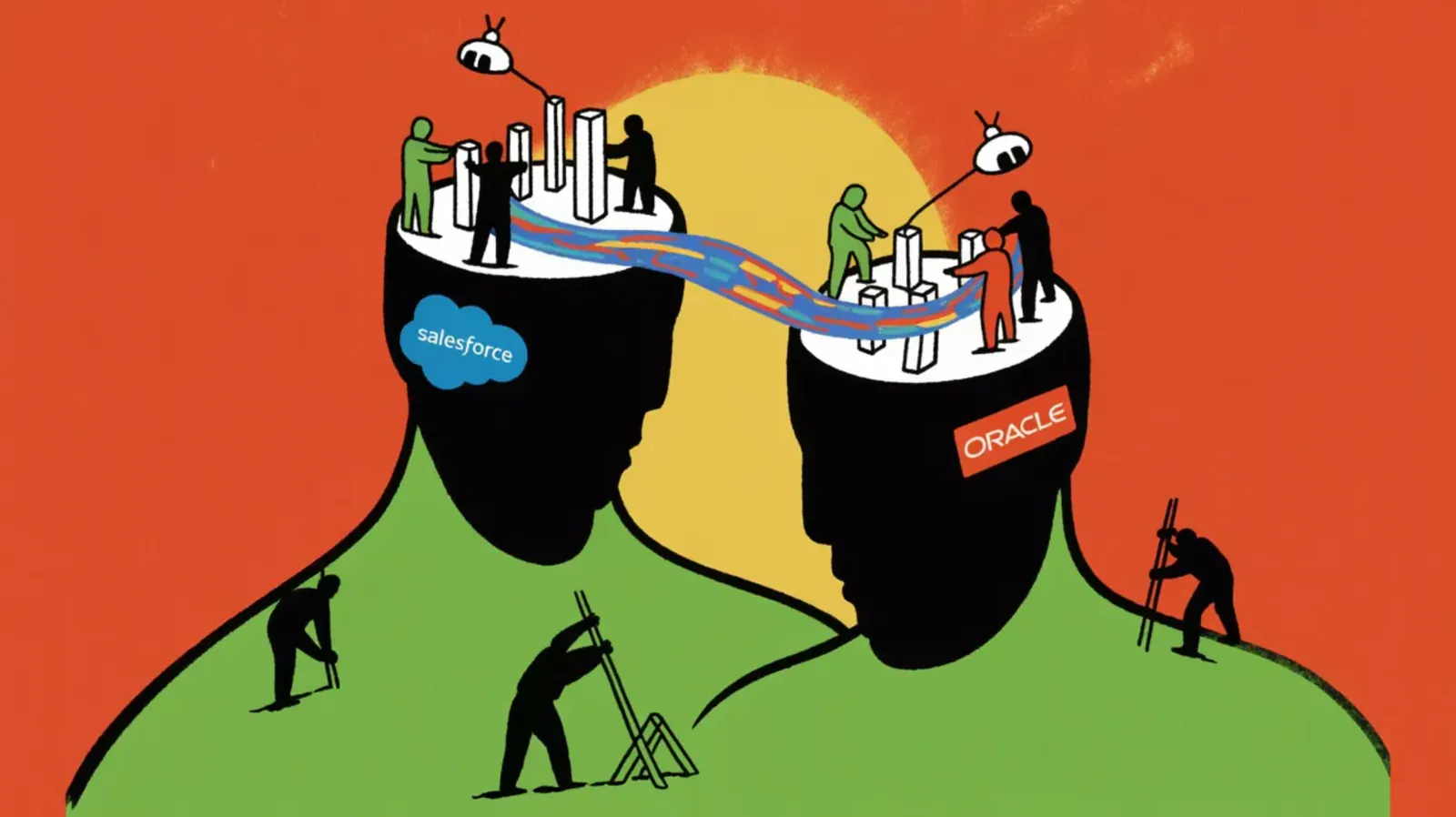
If your company uses Salesforce, Oracle or another enterprise system, what just happened affects you directly. Headless 360 opens the door to use cases that were previously unthinkable.
Some concrete examples:
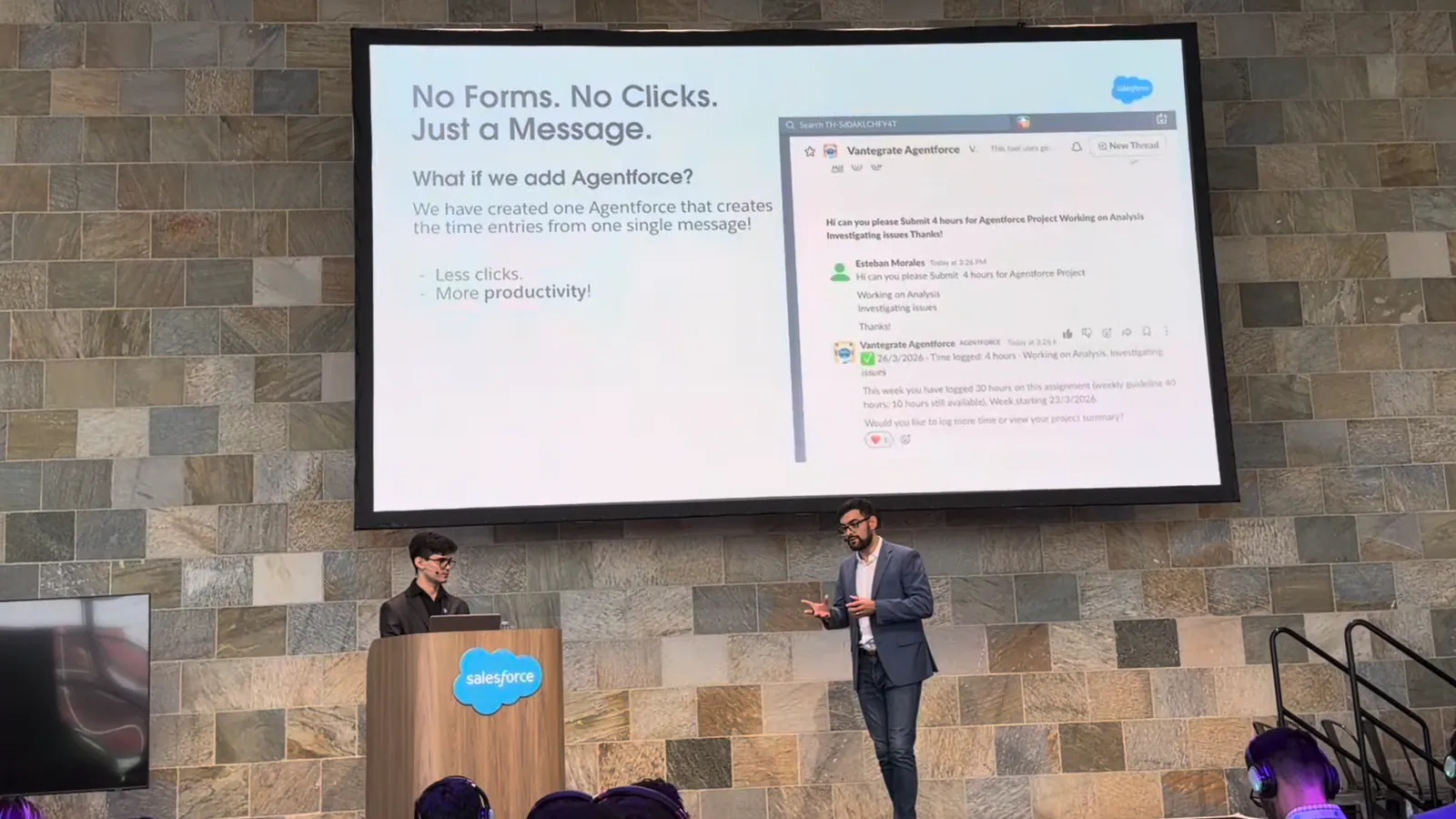
Agents that operate your CRM directly from WhatsApp, Slack or Microsoft Teams without anyone having to open Salesforce
Automated document processing with Arconte, connected live to your organization's logic
Conversational reporting and analytics with tools like Metrix, where you ask an agent something and it brings you the backend data without you touching a single screen
Last mile logistics orchestrated by agents that coordinate dispatch, routing and communication with the customer
The question is no longer whether agents will integrate with your enterprise systems. The question is when and, above all, who will know how to implement them well.
The paradox that changes the rules of the game
There is a beautiful irony in all of this.
The same AI capabilities that threatened to displace traditional software are now the ones Salesforce is using to reinvent itself. Every coding agent that could, in theory, replace a CRM is, through Headless 360, an agent built on top of another.
Salesforce is not fighting the trend. It is embracing it and arguing that decades of accumulated enterprise data, workflows, trust layers and institutional logic produce something that no agent can produce from an empty prompt.
That is precisely the opportunity for mid-sized and large companies that want to capitalize on the agentic wave without throwing away what they have already built. The smart integration of agents with established platforms (with proven security, governance and traceability) is where the game is being played.
What comes next for your organization
If there is one thing we learned at Vantegrate working in this space, it's that spectacular announcements are only the beginning. The hard part comes next: turning technical capabilities into real business results.
Headless 360 changes the rules, yes. But the new rules still have to be learned, mastered and applied with good judgment.
Is your company ready to operate in a world where agents execute critical tasks in your core systems? Are you clear on which processes should stay under strict deterministic control and which benefit from dynamic autonomy? Do you know how to structure testing, observability and governance for agents in production?
If the answers are not as clear as you would like, we can help you define them. Book a demo and let's talk about how to take advantage of this change without falling into its traps.
Because at the end of the day, the question from Parker Harris (cofounder of Salesforce) is still a brutal one: "Why should you ever log in to Salesforce again?"
If Headless 360 works as designed, the answer is: you shouldn't have to. And that, paradoxically, is what will keep Salesforce (and the companies that know how to navigate this change) at the center of the enterprise game for a long time to come.