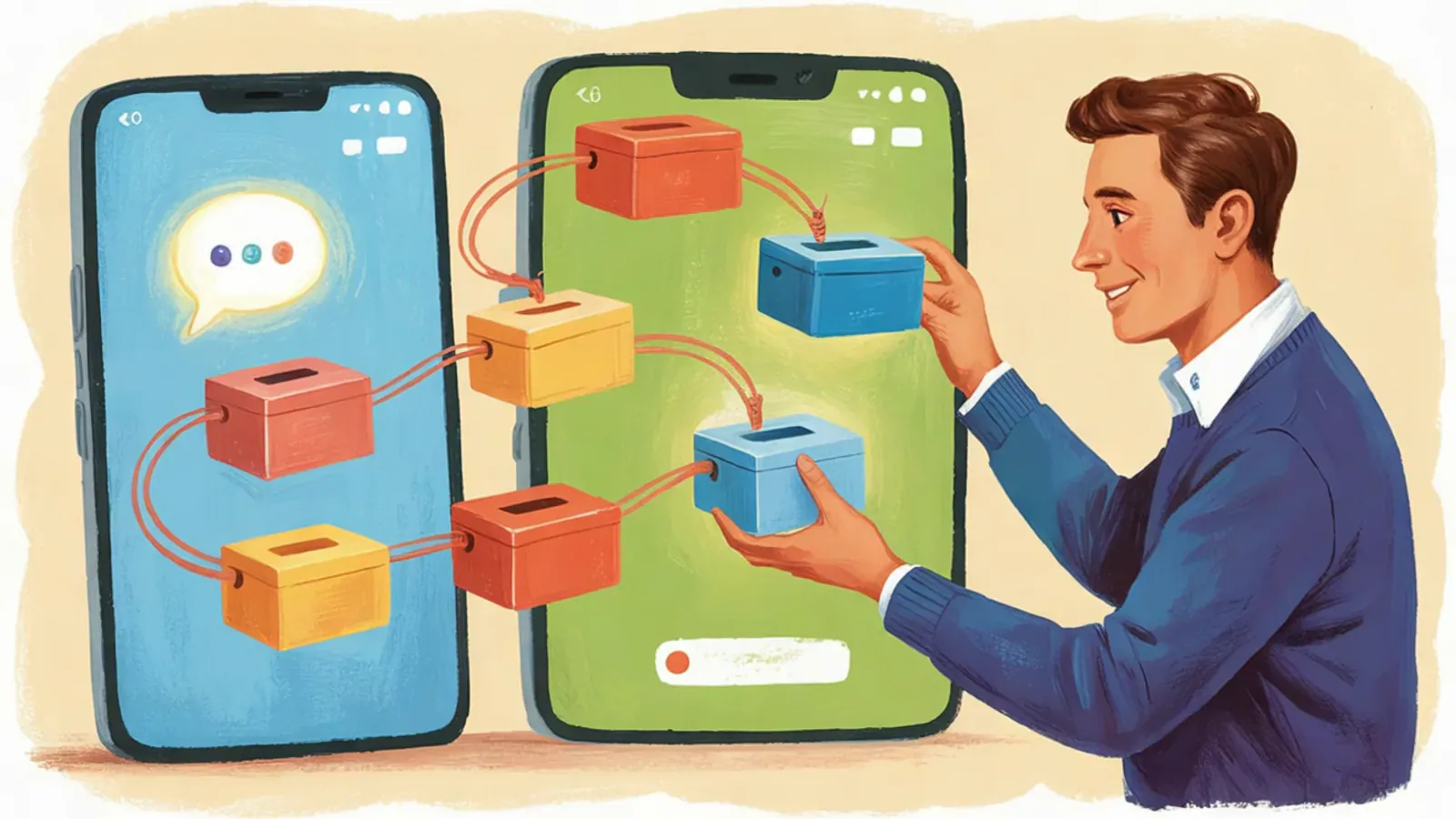

Think for a second about where your customers spend their day. They are on WhatsApp, the same place where they send voice notes to their family and make plans with their friends.
That is also where they decide what to buy. And the companies that understood this are already closing sales inside the chat, while others keep treating the app as a simple support channel.
This guide is a practical map for making that leap. We will walk through the strategies for selling on WhatsApp, the most common mistakes and how to turn any chat into a real purchase.
WhatsApp is no longer just support
For a long time, brands used WhatsApp only to answer questions. Today that idea is completely outdated.
The reality is that the entire buying journey can live inside a conversation. From showing the catalog to confirming payment and letting the customer know the order has shipped, all in the same thread.
Think about how people buy now. Nobody wants to fill out endless forms, wait for email replies or fight with a slow website.
They want instant answers, in the channel they already have open. That is why companies that take sales on WhatsApp seriously grow faster than they do almost anywhere else.
Why the conversation is the new counter
Here is the idea that changes everything. The chat stopped being a messaging channel and became a sales space.
In a physical store, a good sales rep greets you, shows products and walks you to the register. On WhatsApp it works exactly the same, just without distance or business hours.
The customer is already there; all that is left is to guide them to the purchase. They ask, pay and get shipment tracking without jumping to another screen.
When that journey is simple, buying feels almost natural. And a natural purchase is the one the customer repeats without thinking twice.
Why selling on WhatsApp works so well
It is not magic or a passing fad. There are concrete reasons behind the good results.
Two-way conversations
WhatsApp allows a real dialogue. The customer asks, the business answers and the purchase happens right there, without jumping to another screen.
That closeness changes everything. A fast, friendly reply clears up doubts that a form could never resolve.
Trust and less friction
When someone writes on WhatsApp, they are letting the brand into a personal space. It is the same place they reserve for their loved ones.
A short product video, a voice note or a clear answer reduces distrust. And less friction always means more conversions.
Messages that actually get read
Email gets lost among dozens of promotions. By contrast, the vast majority of WhatsApp messages are opened within the first few minutes.
That means the offer actually gets seen. And an offer seen on time is an offer that can convert.
The buying journey, all inside the chat
The digital counter needs an organized foundation to run without friction. Without it, conversations turn into chaos that is hard to follow.
A tool like Sellium takes that experience to the extreme, because it organizes every step of the sales process inside WhatsApp. That way, the team stops chasing loose orders and starts selling with a clear flow.
Within a single thread, the customer can:
Discover products with a browsable catalog and visual content.
Choose what they want and build their cart without leaving the app.
Pay with a direct, secure link in seconds.
Track their order in real time until delivery.
The result is a simple, memorable purchase. And that is exactly the kind of experience that creates customers who come back.
Strategies to increase sales on WhatsApp
Let's get practical. These are the tactics that work best to sell more without growing the team or complicating the operation.
Personalized recommendations
Sending the same message to everyone is a recipe for being forgotten. It pays to tailor each suggestion to what the customer bought before or asked about in the chat.
A recommendation that feels chosen on purpose shortens the buying decision. Customers want to feel understood, not bombarded.
A good trick is to pair the product with a short note explaining why you are suggesting it. That sounds human and builds credibility instantly.
Catalogs and content that show the product in action
A well-built catalog lets customers browse and choose without leaving the app. Add photos, short videos and guides so that buying feels like chatting with an advisor.
Rich content reduces doubts because it shows the product working. Seeing always convinces more than reading a spec sheet.
Instead of sending the entire catalog, put together a mini catalog of two or three products. Something like "based on what you looked at last time, here are a few options" works much better.
Recovering abandoned carts
When someone adds products but does not finish paying, they have not always lost interest. Often they just got distracted.
A friendly reminder a few hours later closes that gap before they forget. It helps to include the product photo, the price and a direct payment link.
To give an extra nudge, add a small incentive. Free shipping or a free sample is often enough to turn hesitation into a purchase.
Upselling and cross-selling in the conversation
When the customer is already in buying mode, it is the ideal moment to suggest an add-on. If they are getting a phone, offer a case; if they are buying a laptop, a stand.
The key is to present the extra as a benefit, never as a forced sale. Saying "most people add this because it saves them from reordering" works better than "Want to add anything else?".
Exclusive time-limited offers
Promotions reserved only for your WhatsApp audience have a powerful effect. Exclusivity combined with urgency pushes people to act fast.
Customers feel like part of a special group. A countdown or a clear expiration date does the rest.
The key is not to overdo it. If these offers show up all the time, they stop feeling special and lose their magic.
Interactive flows to get to know the customer
Instead of asking them to "fill out a form," invite them to a guided conversation. A couple of simple questions are enough to understand what they need.
These interactive flows qualify leads without feeling like an interrogation. And at the end of the journey, a small commitment (a free sample, a discount) keeps the momentum going.
This is where conversational marketing shines. Platforms like Revio turn those dialogues into measurable campaigns, instead of scattered messages that get lost.
Order tracking and post-sale
Customers love transparency. Notifying them at each stage (preparing, on the way, delivered) reduces "where is my order?" inquiries.
That same thread is useful later to sell to them again. A satisfaction survey or a discount on the next purchase reactivates the relationship.
Last-mile logistics is decisive at this point. Solutions like Trazzo optimize delivery and keep the customer informed, which is key in sectors like e-commerce.
Referral and loyalty programs
People trust other people more than any ad. That's why a recommendation from a friend is worth its weight in gold.
Create a simple referral code that customers can share on WhatsApp. Reward both the person who recommends and the new customer who arrives.
Present the program as a fun challenge. "Invite three friends this week and unlock a benefit" performs far better than the fine print.
From chat to checkout: the full funnel
A sale doesn't hold up if every message needs a manual reply. That's where automation comes in, guiding the customer from "hello" to payment.
The winning formula combines bots and people. Automation handles the repetitive tasks, while the team focuses on closing the highest-value sales.
All of this gets stronger when AI agents take over the routine conversations. They respond at any hour, reply instantly, and hand off to a person when needed.
The customer never feels like they're talking to a cold machine. They feel well taken care of, and that perception is what finally closes the purchase.
Connect WhatsApp with the rest of your operation
WhatsApp alone doesn't offer catalogs, cart recovery, or sales reports. That's why it's best to back it with a solid foundation, connecting conversations through the WhatsApp Business API.
Integrating those dialogues with an enterprise-grade CRM platform organizes each customer's data in one place. That way, every chat is recorded and no lead is lost along the way.
That integration also adds a layer of security that companies value more and more. Looking after the data protection of every conversation stops being a detail and becomes a priority.
Measure what matters
Selling on WhatsApp without looking at the numbers is like driving with your eyes closed. The data tells you who to target, when to do it, and how to get the customer to come back.
The key is to move from vanity metrics to real revenue visibility. It's not enough to know how many people opened a message; what matters is how many ended up buying.
A business intelligence solution like Metrix turns those conversations into actionable information. Suddenly, every campaign becomes measurable and every message has a clear return.
With that visibility, the team discovers what works and doubles down. And what doesn't perform gets corrected before you overspend.
WhatsApp adapts to every industry
The interesting thing about this channel is that it works for almost everyone. A fashion brand, a wholesaler, or a bank use it in different ways, but with the same logic.
The needs of a retail store are not the same as those of a financial service or a consumer goods company. The good news is that the conversation adapts to each case.
What matters is choosing a solution designed to support the entire journey. One that combines catalog, checkout, cart recovery, and reports in one place.
Before deciding, it's worth getting to know the team behind the tool. Knowing who is on the other side gives you peace of mind and makes a difference in the long run.
Common mistakes when selling on WhatsApp
Selling on this channel is all about trust. The customer invited the brand into an intimate space, so every message has to add value.
Keep an eye out for three typical missteps:
Overdoing the frequency: sending messages nonstop leads straight to silence or, worse, to being blocked.
Sounding like a robot: a cold tone creates distance, even if the message looks perfect.
Not segmenting: the same promo for everyone falls on the wrong ears and loses strength.
The good news is that these mistakes are easy to avoid. With a bit of judgment, every notification feels valuable and worth opening.
How much it costs to get started
A common question is how much you need to invest to sell on WhatsApp. The short answer is that it adapts to the size of each business.
It's worth reviewing the available plans to find the one that grows alongside your project. The right investment is the one that pays for itself with the sales it generates.
The best approach is to start simple and scale as conversations grow. Nobody needs to solve everything at once to start seeing results.
Frequently asked questions about WhatsApp sales
Can a small company sell on WhatsApp without a large team?
Absolutely. With automations like cart reminders or product flows, your team only steps in when a human touch is needed.
This way, a small brand scales its customer service without adding headcount. Technology does the heavy lifting and people close the important sales.
What return can you expect from WhatsApp sales?
It depends on how you use the channel, but the trend is clear. Brands that sell on WhatsApp usually see more conversions and a lower acquisition cost.
Since almost all messages are read within minutes, the level of engagement is very high. That makes the return easier to achieve than with email or SMS.
Is WhatsApp better than email for closing sales?
In most cases, yes. Messages are read almost instantly, while emails tend to get buried.
Chat also feels more personal and direct. That closeness makes customers more willing to reply and buy, especially when the conversation happens in real time.
Can you connect WhatsApp to an online store?
Completely. Conversational platforms integrate with your store and CRM so that the catalog, payments and follow-up work inside the chat.
This way, every conversation translates directly into a concrete sale. The conversation and the operation no longer run on separate tracks.
How do you measure the performance of WhatsApp sales?
You track metrics such as opens, clicks, conversions and revenue impact. A good analytics dashboard connects those numbers to each customer and each campaign.
That makes it crystal clear which messages generate real sales. The best way to confirm it is to see it in action with your own business.