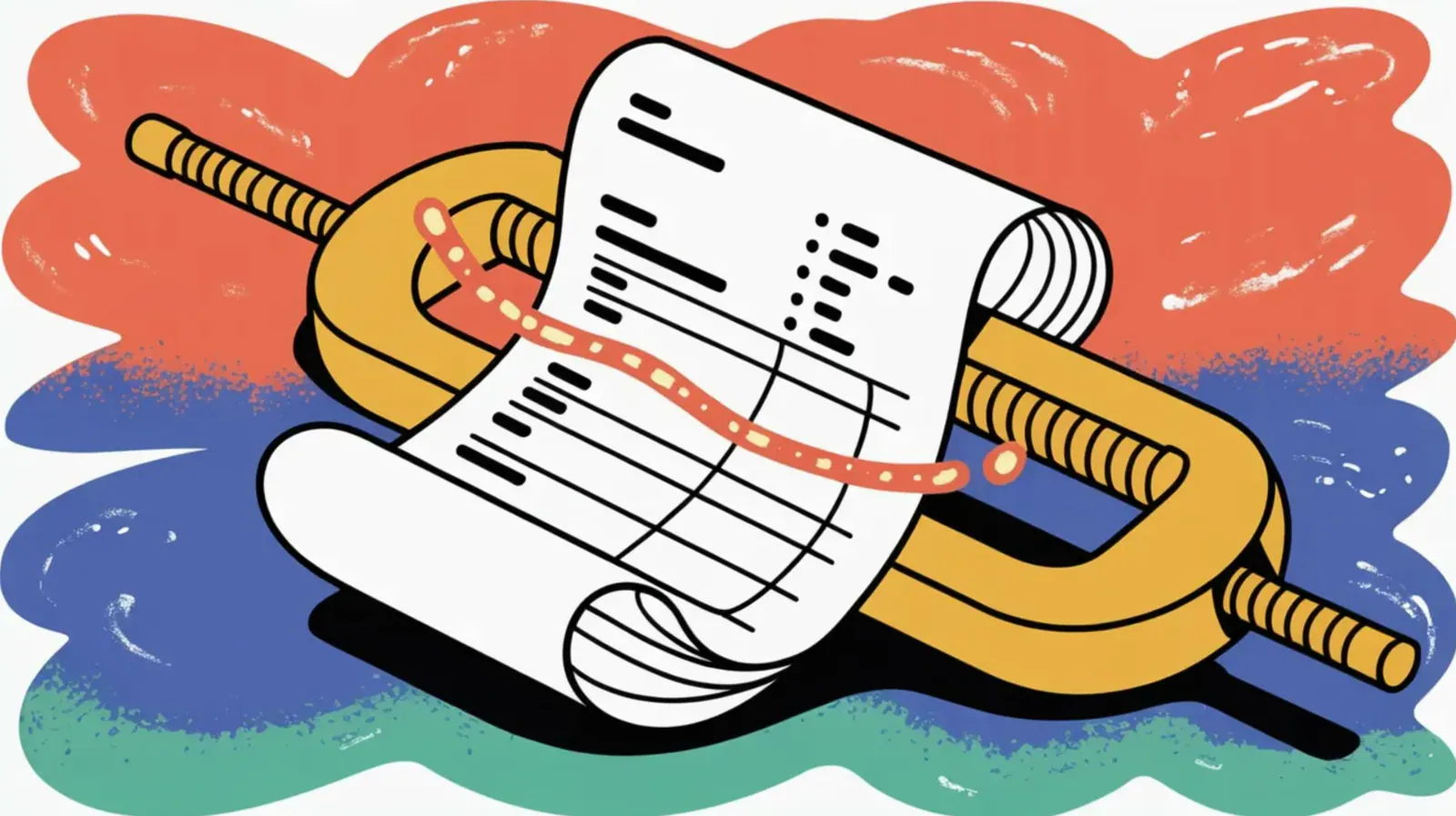

They are beautiful numbers. The problem is that almost none of them survive a simple question: where did that figure come from?
We asked ourselves that question. And since we build five AI products that compete in those same categories, we decided to do something uncomfortable for our own industry: dig into which figures are real, which are inflated, and which have no verifiable source behind them at all.
What we found surprised even us.
Why we got into this
When you build the website of a technology company, there comes a point where you have to put numbers on it. "Increase your sales by X%." "Save Y hours per week." It is what everyone does, and the temptation to copy the biggest figure you find on Google is huge.
We decided not to do it. Instead of copying the flashiest number, we set out to publish only figures we could defend in front of a client who questions them and in front of a lawyer who reviews them. If we were going to put a percentage on our homepage, we wanted to be able to show the study, the sample, the year and the link.
That decision led us to a full market investigation across the five categories we work in:
Conversational sales on WhatsApp (our product Sellium)
Conversational business intelligence (Metrix)
Intelligent document processing (Arconte)
Last-mile optimization (Trazzo)
For each one we looked for two different things and always kept them separate: what vendors claim in their marketing, and what independent studies validate. Because it is not the same for a vendor to say its product returns 60 times the investment as for McKinsey, Harvard Business Review or a peer-reviewed paper to measure it with a public methodology.
The three biggest lies in the industry
Before going product by product in the upcoming posts of this series, we want to show you the three clearest examples of what we found. These are figures you will see repeated on hundreds of sites and that, when you follow them back to their origin, deflate.
Lie 1: "WhatsApp has a 98% open rate"
This is probably the most cited statistic in all of conversational marketing. It appears in hundreds of articles, presentations and product pages. It has just one problem: there is no public study that backs it up.
The number traces back to an estimate attributed to the consulting firm Mobilesquared, with no published methodology. What stands out is that even the vendors themselves have started to admit it: a WhatsApp statistics guide from 2026 openly acknowledges that the figure "is repeated in hundreds of articles but lacks a verifiable primary source" (AiSensy, 2026).
What is the real number? When it is actually measured, the median open rate of WhatsApp campaigns is 72% per brand, across 414 e-commerce brands (Chatarmin, 2026). It is still excellent, more than triple email, which averages 20.73% excluding Apple Mail automatic opens according to Brevo (2026), but it is an honest number, not an invented one.
Lie 2: "Our AI has 99% accuracy reading documents"
In document processing, "99% accuracy" is almost a marketing standard. And it is not entirely false: leading vendors like ABBYY do report accuracy of 99% or more. But there is a fine-print catch that almost nobody clarifies.
That 99% applies to the header fields of an invoice (the total, the date, the number) under clean conditions. When you go down to the line items (each item, quantity and price within the invoice), accuracy drops, and that is precisely where the tools differ. And "out of the box", without training the system on your company's specific documents, a vendor like Nanonets puts its accuracy between 93% and 96% (comparative analysis of IDP tools, 2026).
The defensible range, then, is not a flat "99%". According to Gartner, machine learning can take accuracy to the high 90% range on machine-readable documents, not on images (Gartner), and the only figure that matters for your company is the one measured on your own documents. Less impressive in a headline, infinitely more credible at a negotiating table.
Lie 3: "Chatbots resolve 67% of inquiries on their own"
The "automatic resolution" figures of conversational agents are among the most inflated in the industry. You will see 67%, 70%, even 80% of inquiries resolved without human intervention.
The reality, measured end to end, is considerably more modest: AI resolves on its own 1 out of every 5 inquiries it handles, according to a measurement across 2.9 million tickets (Chatarmin, 2026). The problem is how it is counted: many dashboards inflate the result by logging as "resolved" conversations where the customer simply left without getting a correct answer.
This doesn't mean AI agents are useless. It means an honest vendor tells you "our AI resolves 1 in 5 inquiries on its own and hands you the rest with context," which is already transformative for a support team, instead of promising you an 80% that you won't see.
What is backed up (and it's huge)
Here comes the important part: skepticism didn't lead us to pessimism. When we filter out the noise, what remains is impressive. And the best part is that it comes from sources a customer can verify.
Some of the best-supported findings from the whole investigation:
Responding to a lead in under 5 minutes makes it 21 times more likely to qualify than responding after 30 minutes. This is the Lead Response Management Study by James Oldroyd with MIT and InsideSales.com (2007), still the most cited on the topic.
Generative AI increases the number of inquiries resolved per hour by 14%, and by up to 34% for new employees. It's not a vendor saying so: it was measured by a study of 5,179 support agents published by the NBER and later in the Quarterly Journal of Economics.
Only between 25% and 35% of a company's employees use business intelligence tools. The 25% comes from a survey by BARC and Eckerson Group (2022), and the 35% from Gartner (2019), according to TechTarget. The potential of democratizing data is huge.
AI route optimization lowers fuel consumption: Tesco cut it by 8% per order, in a case published by Satalia, and UPS's ORION system saves about 10 million gallons per year, according to INFORMS, an independent professional association.
None of these numbers is the biggest one we found. But they are the ones we can look you in the eye and stand behind.
How we're going to use this
In the next five posts of this series we'll go through each of our products with the same logic: we show you what the industry promises, what the independent evidence says, and which figure we choose to communicate: always the defensible median, never the spectacular extreme.
When we publish a number on our site, it will come with its source in parentheses. When a data point has no reliable backing, we won't use it, however tempting it may be. And when we have a result of our own that beats the industry median, it will come from a real customer willing to confirm it by name.
We believe that in a market saturated with inflated figures, rigor is the best sales argument there is. We don't ask you to take our word for it: we give you the links so you can verify it yourself.
Let's get started.
The complete series: The real numbers of enterprise AI
This introduction: Why you won't find made-up figures on our site (you are here).
Sellium: Your chatbot doesn't resolve 80% of inquiries, we lie to you less
Revio: The "98% open rate" of WhatsApp is made up, here is the real number
Metrix: AI won't answer everything for your team, it will answer what matters well
Arconte: Reading invoices with AI, where 99% is true and where it's marketing
Trazzo: Last mile with AI, how much fuel, time and calls you really save
Every figure in this series is backed by its source, with date and methodology when available. If you find a data point you think we should review, write to us: we take this seriously.