
When a mid-sized or large company evaluates bringing artificial intelligence agents into its operations, the first question is never about the model. It's not about the agent's capabilities. It's not about price.
The first question is always the same: Where will my data live?
And that makes sense.
Any conversation about enterprise AI ends up, sooner or later, in one about infrastructure, security and compliance.
That question is what ultimately shaped one of the most important decisions we made when founding Vantegrate.
Here is how we got here.
The original plan: one platform, no seams
When Francisco and I started Vantegrate, we had a clear, closed idea: we were going to build everything on Salesforce.
The logic was solid.
At EGA Futura we have worked for more than fifteen years in the Salesforce ecosystem, first as an ISV and later also as a Consulting Partner.
We know the platform from the inside: its security models, its ability to handle complex business logic, its performance in real operating scenarios at scale.
Building AI agents on Salesforce meant taking advantage of all that from day one. It meant that each customer's data would never have to leave an environment audited by independent third parties and certified to the most demanding standards in the market: ISO 27001, SOC 1/2/3, PCI DSS Level 1, GDPR, HIPAA and FedRAMP.
It meant running on one of the most rigorous cloud infrastructures in the world, without taking on the operational burden of building those guarantees from scratch. If you want to go deeper into how we apply these controls in every implementation, you can review our security architecture.
For the first prospects (mostly companies that already ran on Salesforce or were considering it), the proposal fit perfectly.
Until it stopped fitting.
The moment the conversation changed
As we opened conversations with larger organizations, we started hearing variations of the same sentence:
“We like the proposal, but our whole stack runs on Oracle.”
It was not a minor detail.
We were talking with companies that had Oracle databases running at the heart of their business for decades.
Companies with Oracle EBS or JD Edwards ERPs deeply integrated into their operations. Companies with purchasing policies aligned to a single cloud infrastructure provider, where adding a new cloud meant going through approval processes that could take entire quarters.
The question on the table was direct: were we going to shut out a huge portion of the mid-sized and large market in Latin America because of a technical decision we made at the start?
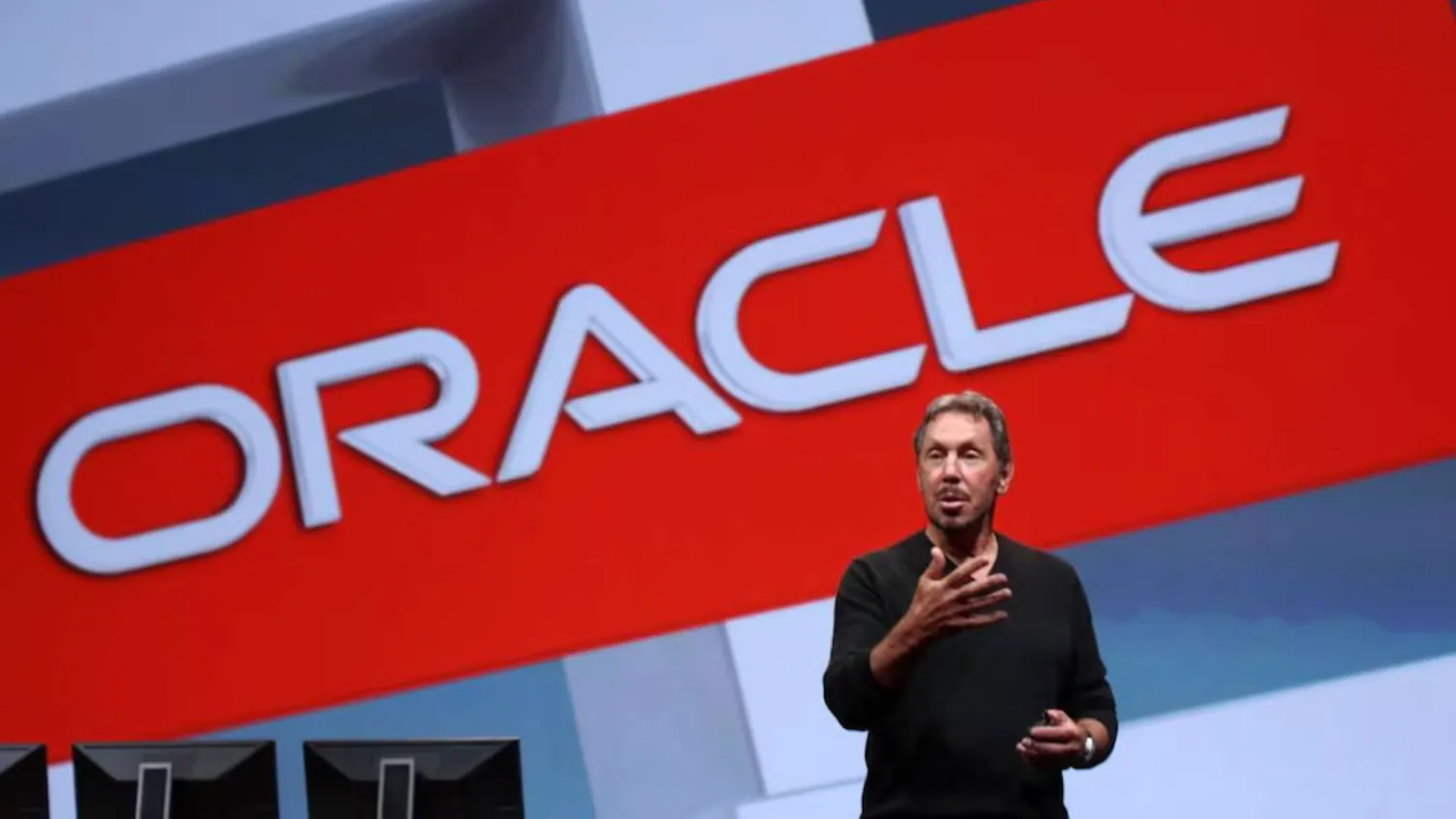
The answer was also direct, even though the execution was not: we became Oracle partners.
One philosophy, two possible infrastructures
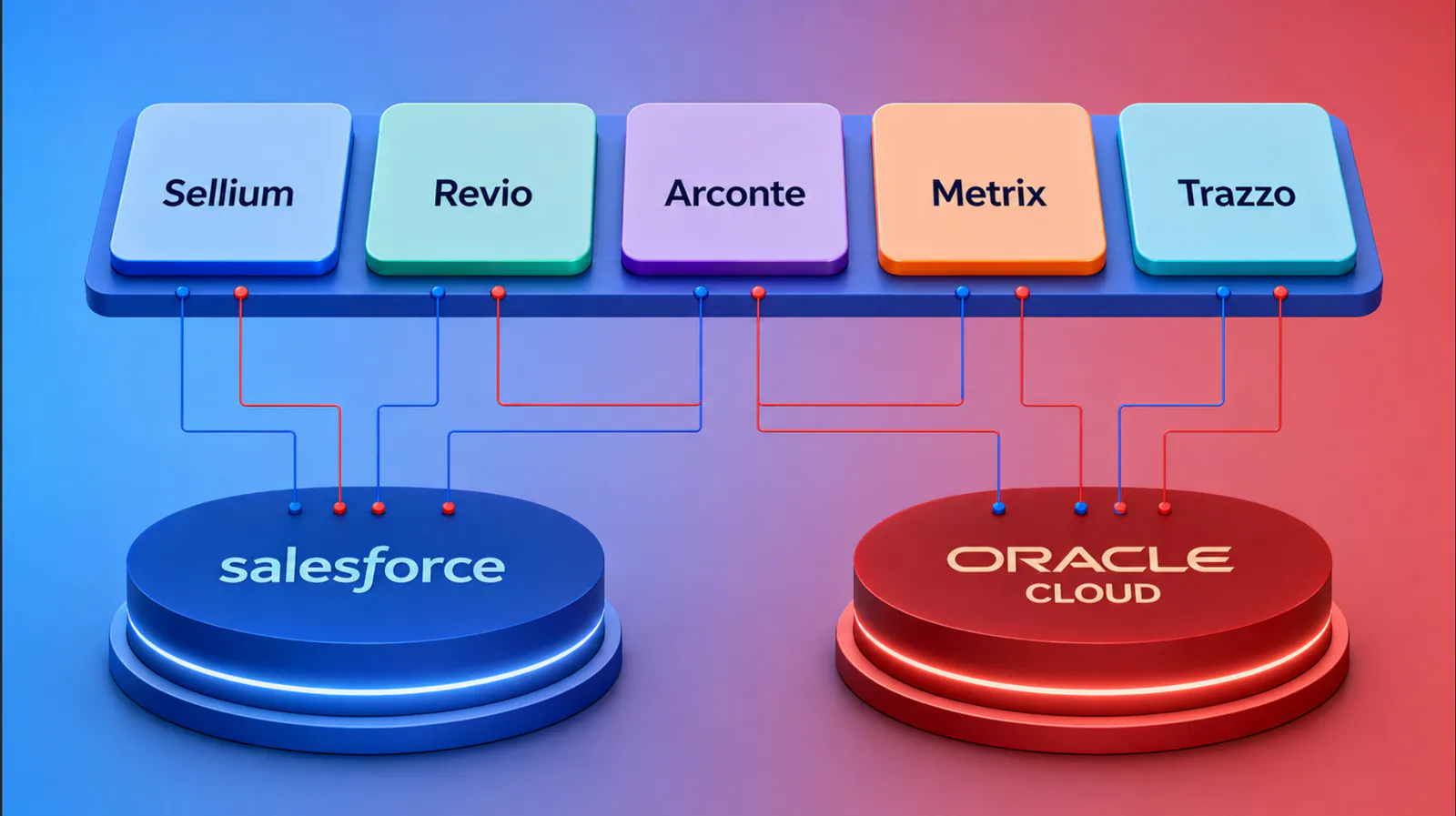
Today, every Vantegrate implementation runs 100% on Salesforce or 100% on Oracle Cloud Infrastructure (OCI).
No intermediate layers managed by us, no unnecessary data replicas, no parallel infrastructure.
Each customer makes the choice, based on their reality:
Deployment on Salesforce: Recommended for organizations that already operate with the Salesforce ecosystem, that value a unified CRM as their operational core or that need native integration with sales and service flows.
Deployment on Oracle Cloud: Recommended for organizations with Oracle databases, specific regional data residency requirements or an Oracle-dominant technology stack in their operation.
What matters: in both cases, the security and compliance guarantees are equivalent.
Both platforms maintain the same critical certifications, the same end-to-end encryption mechanisms (AES-256 at rest, TLS in transit), the same incident response centers operating 24 hours a day, and the same penetration testing protocols audited by independent third parties.
For the customer, the change is invisible in terms of functionality. What changes is the freedom to choose the infrastructure that best fits your technical and regulatory reality.
How this translates into each product in the Vantegrate ecosystem
The decision to operate on two tier-1 infrastructures extends to our entire suite. Each product inherits the controls of the chosen platform and adds specific capabilities depending on the use case:
Sellium: Conversational sales agent for WhatsApp. Conversations, contacts and sales context always reside within the secure environment of your chosen platform, with full traceability of every interaction.
Revio: Marketing campaign platform for WhatsApp. Contact lists, consent records and delivery reports are managed under the same controls you apply to the rest of your critical data.
Arconte: Intelligent document processing. Every processed document is stored encrypted within the chosen platform, with access permissions applied natively by folder and by user.
Metrix: Conversational business intelligence. Queries automatically respect field-level security and each user's permissions, and they run without extracting information outside the secure environment.
Trazzo: Last-mile logistics optimization. Sensitive operational data (routes, stops, drivers) is managed inside your platform, with differentiated permissions for operational roles, supervisors and administrators.
And because the entire suite shares the same infrastructure layer, integration between products happens within a single secure environment.
When Revio feeds conversations that Sellium later converts, or when Arconte extracts data that Metrix later analyzes, there are no hops between clouds and no unnecessary transfers of information.
The lesson we learned
Looking back, opening the door to Oracle was one of the decisions that generated the most commercial traction for us.
What we learned is simple: when a mid-sized or large company evaluates an enterprise AI solution, the infrastructure conversation is not a formality, it is a real filter.
Every CISO, every CTO, every head of procurement has established policies, legitimate technical preferences and contractual commitments with their current stack. Fighting that is not a strategy: it means losing opportunities before you start.
Operating on both Salesforce and Oracle lets us adapt to the technology stack each customer already has, without asking them to change anything to start generating value with AI agents.
In the end, that is the difference between selling a product and building a real enterprise solution.
Do you want to evaluate Vantegrate with your technical team?
We set up a session with your CISO, CTO or whoever you designate. We show you the architecture on the platform that best fits your case, answer your team's specific questions and share the documentation you need for your evaluation.
→ Explore plans and implementation options
-