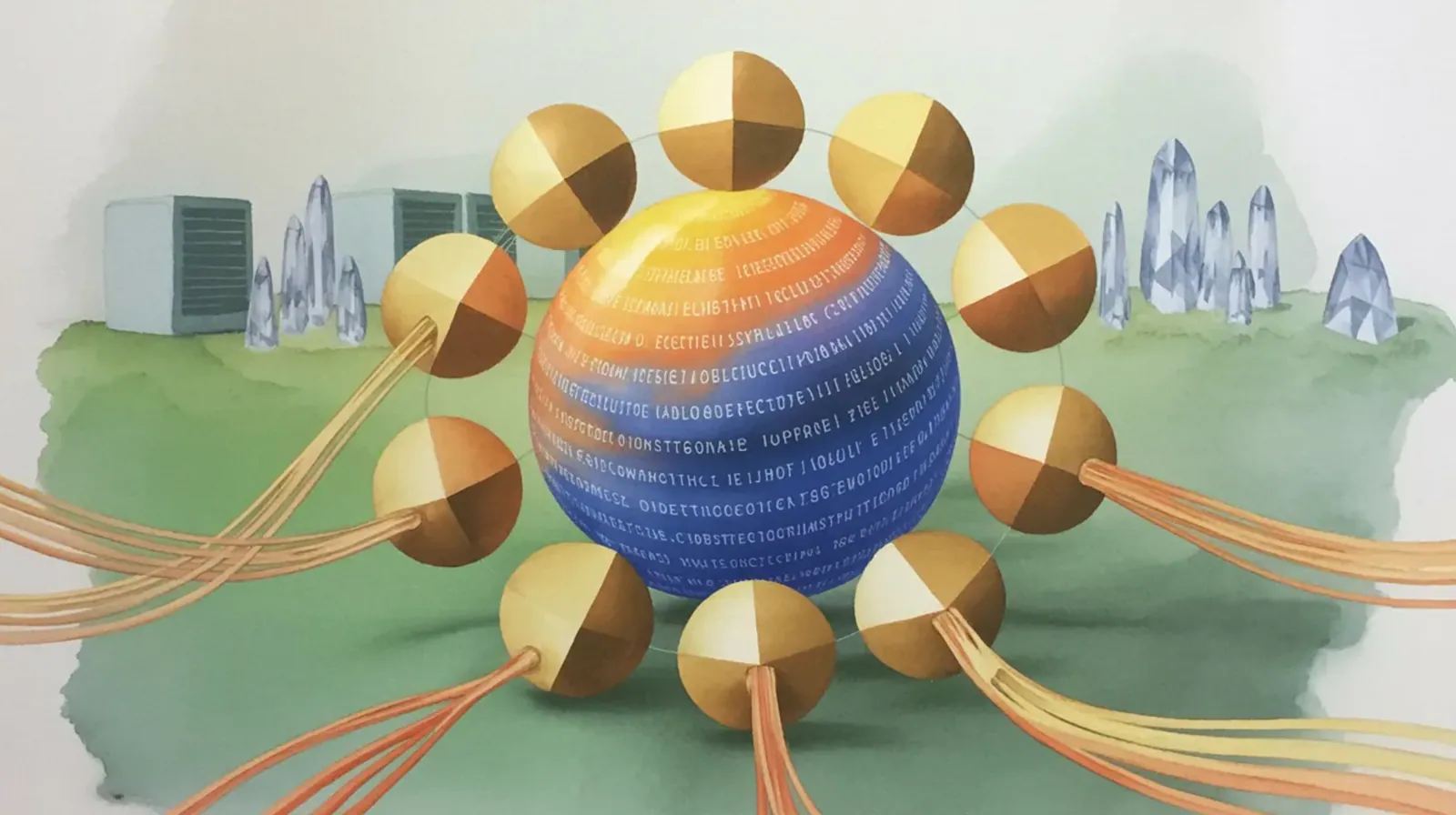
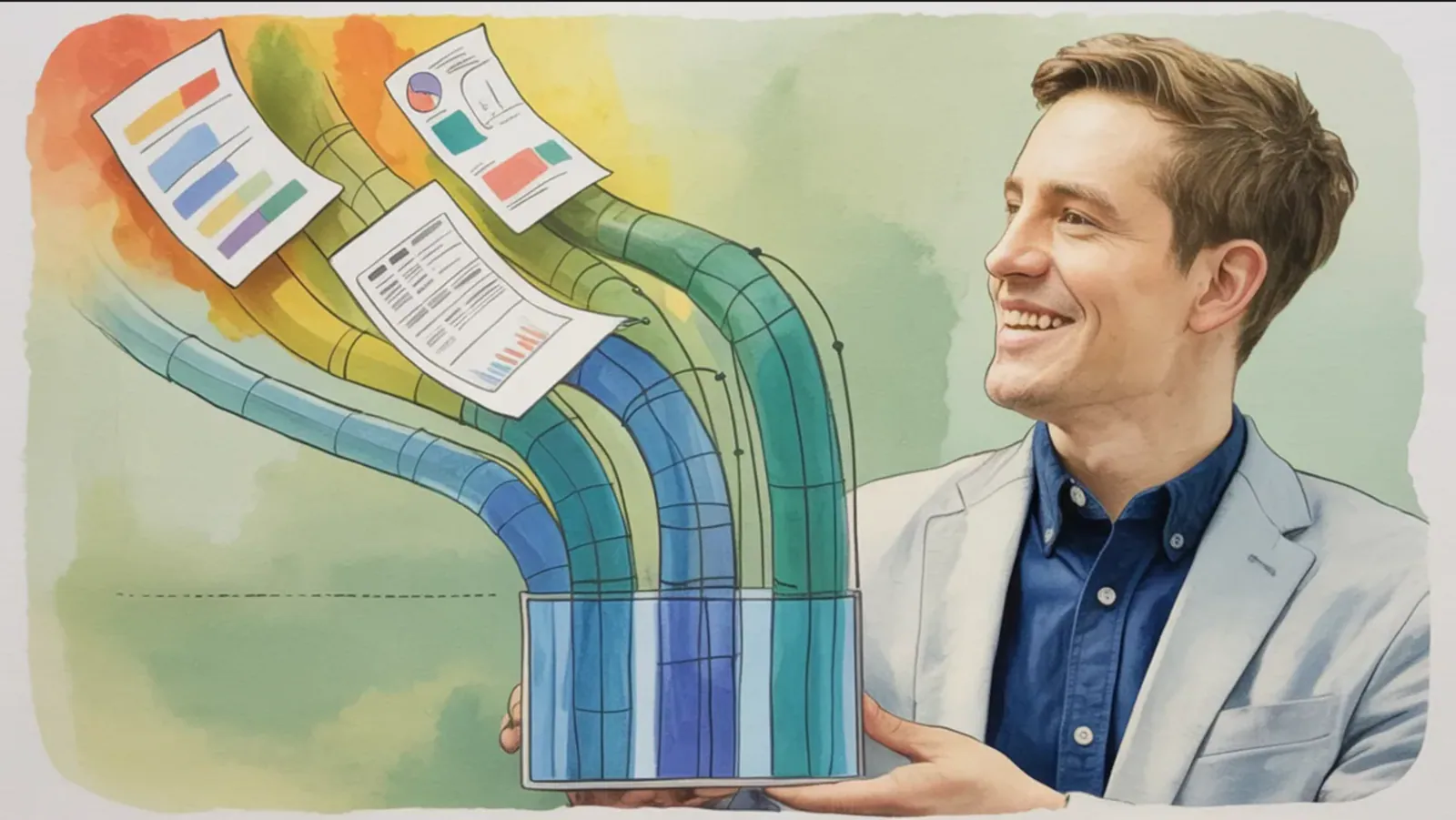
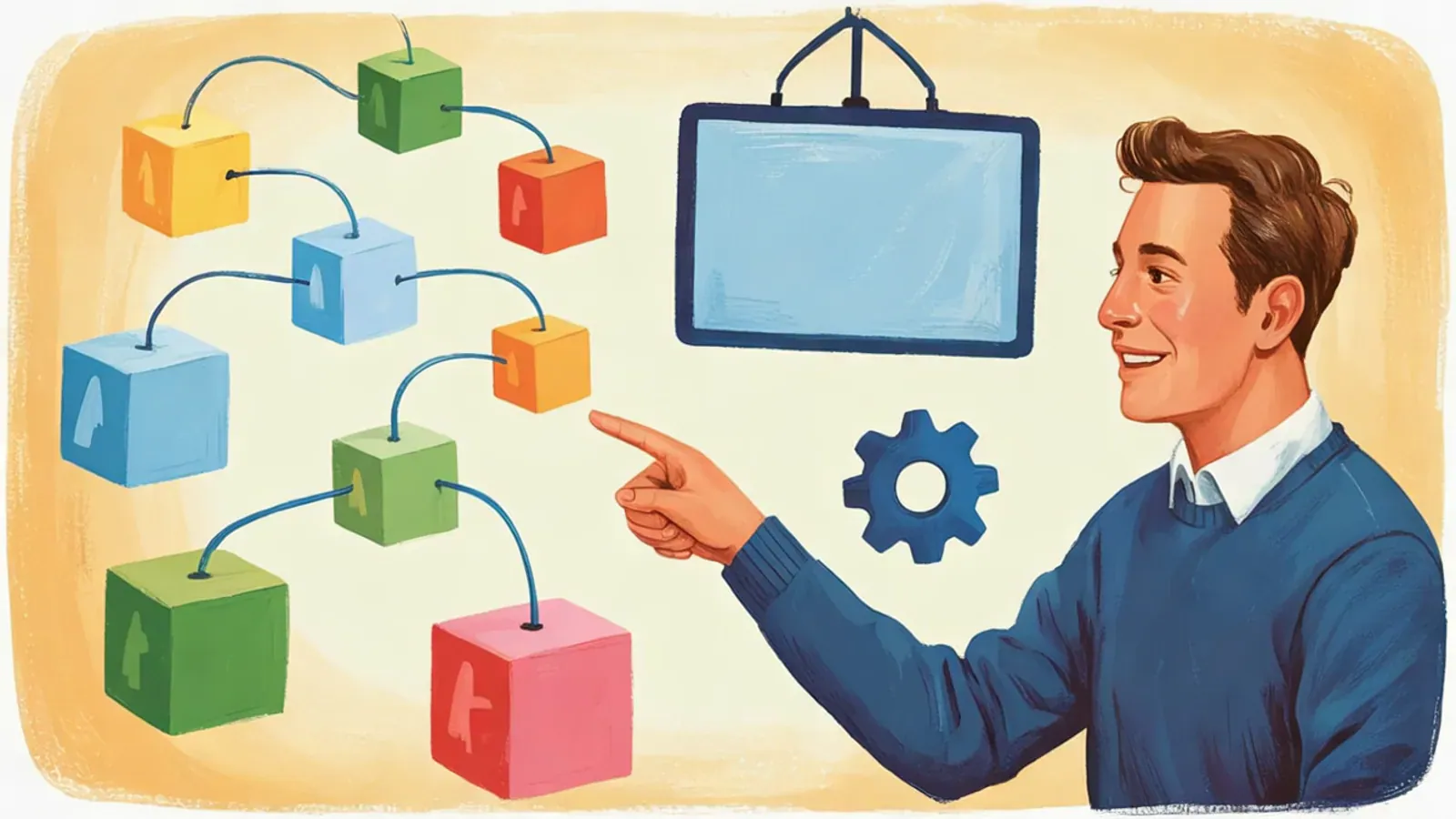


RAG (retrieval-augmented generation) is a technique that connects a large language model (LLM) to your company's own data so it answers with verifiable context instead of making things up. Before generating an answer, the system searches your sources (documents, databases, tickets, catalog) for the relevant fragments and passes them to the model as evidence. That way, the answer relies on real information and not only on what the LLM learned during training.
What problem does RAG solve compared to a standalone LLM?
An LLM on its own has knowledge frozen at its cutoff date and knows nothing about your contracts, your stock, or today's prices. When it lacks information, it tends to hallucinate: it fills the gaps with plausible but false data. RAG attacks that at the root: it injects fresh, specific context into every query, which reduces made-up answers and helps the model generalize better to cases outside its domain. A study presented at NAACL 2024 (industry track) on generating structured outputs in enterprise applications showed that RAG reduces hallucinations, improves performance in out-of-distribution scenarios, and makes it possible to use smaller models (and therefore cheaper to run) without losing quality (Bechard and Ayala, NAACL 2024).
How does a RAG architecture work step by step?
The typical flow has three stages. First, indexing: your documents are split into fragments (chunks) and converted into vectors with an embeddings model, which are stored in a vector database. Second, retrieval: when a question comes in, the system searches by semantic similarity (sometimes combined with keyword search, which is called hybrid search) and pulls the most relevant fragments. Third, generation: those fragments are included in the prompt and the LLM writes the answer, citing that evidence. The final quality depends on both the retriever and the generator: if retrieval brings back junk, the model answers with junk.
What does it take for RAG to work well in production?
The engineering details decide the outcome. What matters is the chunking strategy (size and overlap of the fragments), the choice of embeddings model, the use of a reranker to order the candidates, and metadata filters to narrow results by customer, date, or permissions. Evaluation is also key: measuring whether the answers are faithful to the sources (faithfulness) and whether what was retrieved is actually relevant. For data that changes often, you should keep the index up to date, and for questions that span many entities, GraphRAG starts to come into play, adding a knowledge graph to retrieval.
Where does RAG fit in a Latin American company?
RAG is what lets an assistant answer about your real data and not in the abstract: internal policies, a customer's history, business metrics. At Vantegrate, Metrix uses this logic to answer questions about your indicators in natural language over WhatsApp, Slack, or Teams, and our AI agents rely on your company's context to give well-grounded answers. If you want your AI to stop improvising and speak based on what your business knows, RAG is the way.